Pharmacy, Cosmetic Chemistry and Biotechnology RESEARCH GROUP
Bioactive Materials, Cosmetics and Detergents Section
We research natural active substances and their use in health-promoting products, cosmetics and sustainable agriculture. Our innovative solutions combine science, modern technologies and care for the environment, supporting the development of safe, effective and nature-friendly products.
CONTACT
Jolanta Janiszewska, PhD. Sc. Eng.
phone +48 517 883 174
jolanta.janiszewska@ichp.lukasiewicz.gov.pl
We specialise in developing functional materials with natural active substances. We create and improve dermatological and cosmetic products, as well as high-performance household chemicals that combine effectiveness with care for the environment, supporting the development of safe and innovative solutions for industry.
BIOLOGICALLY ACTIVE SUBSTANCES FOR THE LIFE SCIENCE INDUSTRY
- Plant extracts – secondary metabolites with anti-inflammatory and antioxidant properties
- Oil extracts with a beneficial fatty acid composition
- Obtaining unsaponifiable fractions for cosmetic applications
- Hydrolysis of natural proteins and secretion of high-protein active fractions
- Identification of the activity of isolated substances and determination of their applications
- Functionalisation of plant extracts and protein derivatives to increase penetration and/or biodistribution
DEVELOPMENT OF HEALTH-PROMOTING PRODUCTS (DERMATOLOGICAL AND COSMETIC)
- Development of recipes and manufacturing technologies for specific product groups
- Selection of safe and functional formulation ingredients in accordance with EU guidelines
- Analysis of cosmetic raw materials using spectroscopic and chromatographic techniques
- Assessment of performance properties under laboratory and real-life conditions (non-invasive skin testing equipment, consumer testing)
- Conducting the necessary research to launch the product on the market
- Preparation of technological and product documentation
- Selection of packaging, conducting tests of compatibility of the mass with the packaging
- Expert opinions enabling product positioning on the market and determining appropriate marketing activities
INNOVATIVE HOUSEHOLD CHEMICAL PRODUCTS
- Recipes and manufacturing technologies for specific product groups
- Selection of safe and functional ingredients for specific formulations
- Shaping the form in surfactant solutions and final products determining their functionality
- Methods for comprehensive assessment of raw materials and final products
- Support in preparing safety data sheets for household chemicals
Hitachi U-2900 UV-Vis spectrophotometer
dual-beam, enables spectral analysis in the ultraviolet and visible light range, both qualitative and quantitative, as well as kinetic studies and tracking of various dynamic processes.
Apparatus for analysing ammonium and ammoniacal nitrogen according to the Kjeldahl method, consisting of a mineraliser and a distillation unit.
KS 4000 ic control incubator (incubator with shaking). Used for unattended processes with specified shaking, temperature (-10°C to 80°C) and time parameters.
A 2L laboratory-scale process device for product creation and process development for mixing and emulsifying batches ranging from low viscosity to liquid masses. It is used for mixing, dispersion, wet grinding and combining powders with liquids on a laboratory scale. The device operates in the viscosity range up to 100,000 mPas.
Station for non-invasive dermatological examinations
Courage + Khazaka skin testing device – a multi-user MPA system consisting of a base unit and a set of probes for measuring selected skin parameters: skin surface hydration, melanin and erythema, skin elasticity, transepidermal water loss (TEWL), pH, sebum secretion on the skin, hair and scalp.
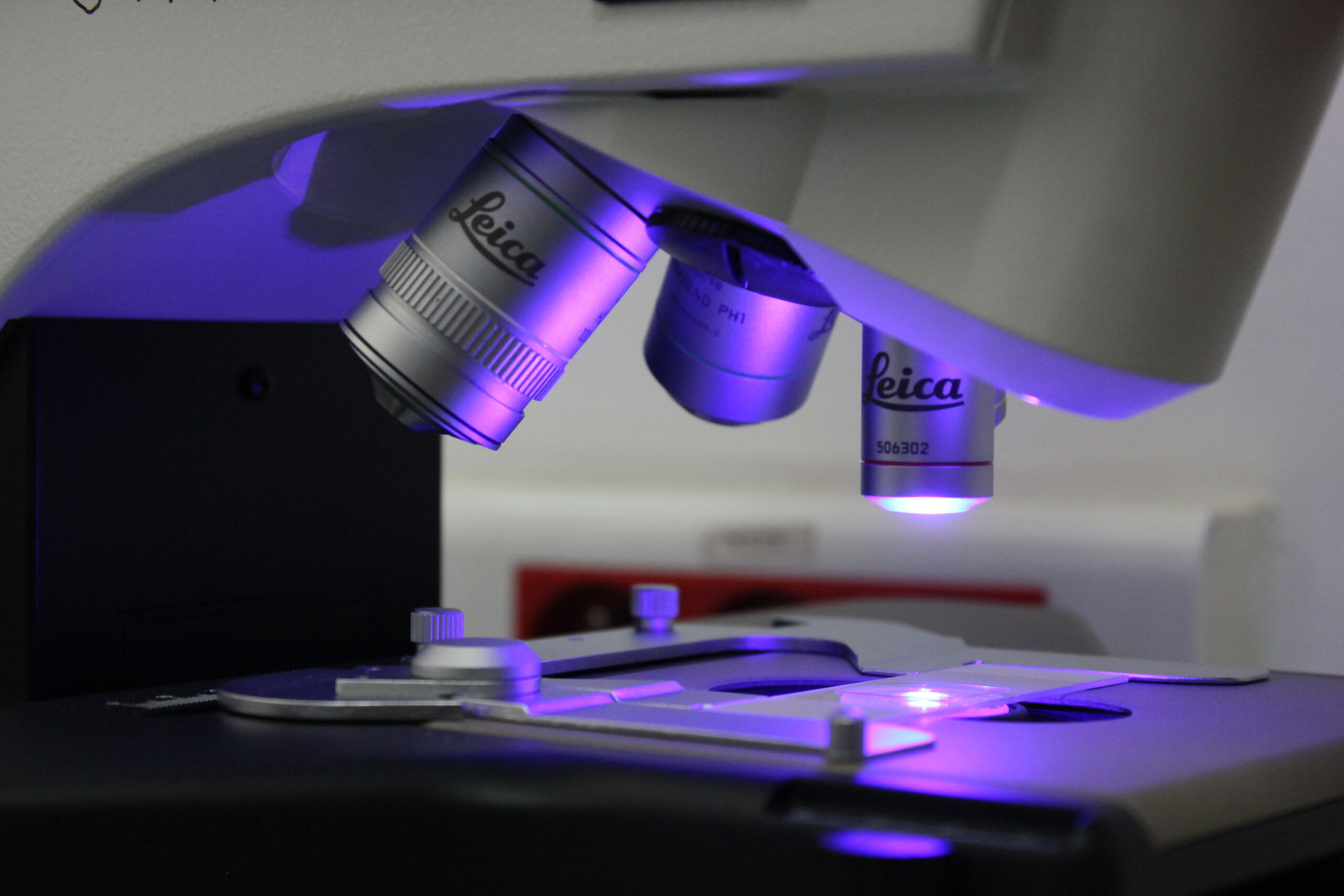
A station for assessing the quality of cosmetic and pharmaceutical products, equipped with apparatus for:
- analysis of the size and distribution of emulsion droplets (microscopic and centrifugal testing),
- physical stability testing, including emulsion phase separation, creaming, coalescence
- thermal stability testing compatibility testing (temperature cycles in a climate chamber)
- ageing tests (for accelerated assessment of the resistance of materials to light and atmospheric conditions).
- rheological tests (viscosity, density)