As part of our website, we use cookies to provide you with the highest level of service, including services tailored to your individual needs. By continuing to use the website without changing your cookie settings, you agree to the placement of cookies on your device as described in our Privacy Policy. You can change your cookie settings in your web browser at any time. Acceptance of essential cookies is required for the proper functioning of the website. For more detailed information, please refer to our PRIVACY POLICY.
API syntesis
Department of Pharmaceutical Products
Development of Active Pharmaceutical Ingredient (API) manufacturing technology
– Development of technologies for the production of active substances on a mini-synthetic and semi-technical scale
– Scaling up with validation of ongoing processes
– Organic synthesis of GMP and non-GMP
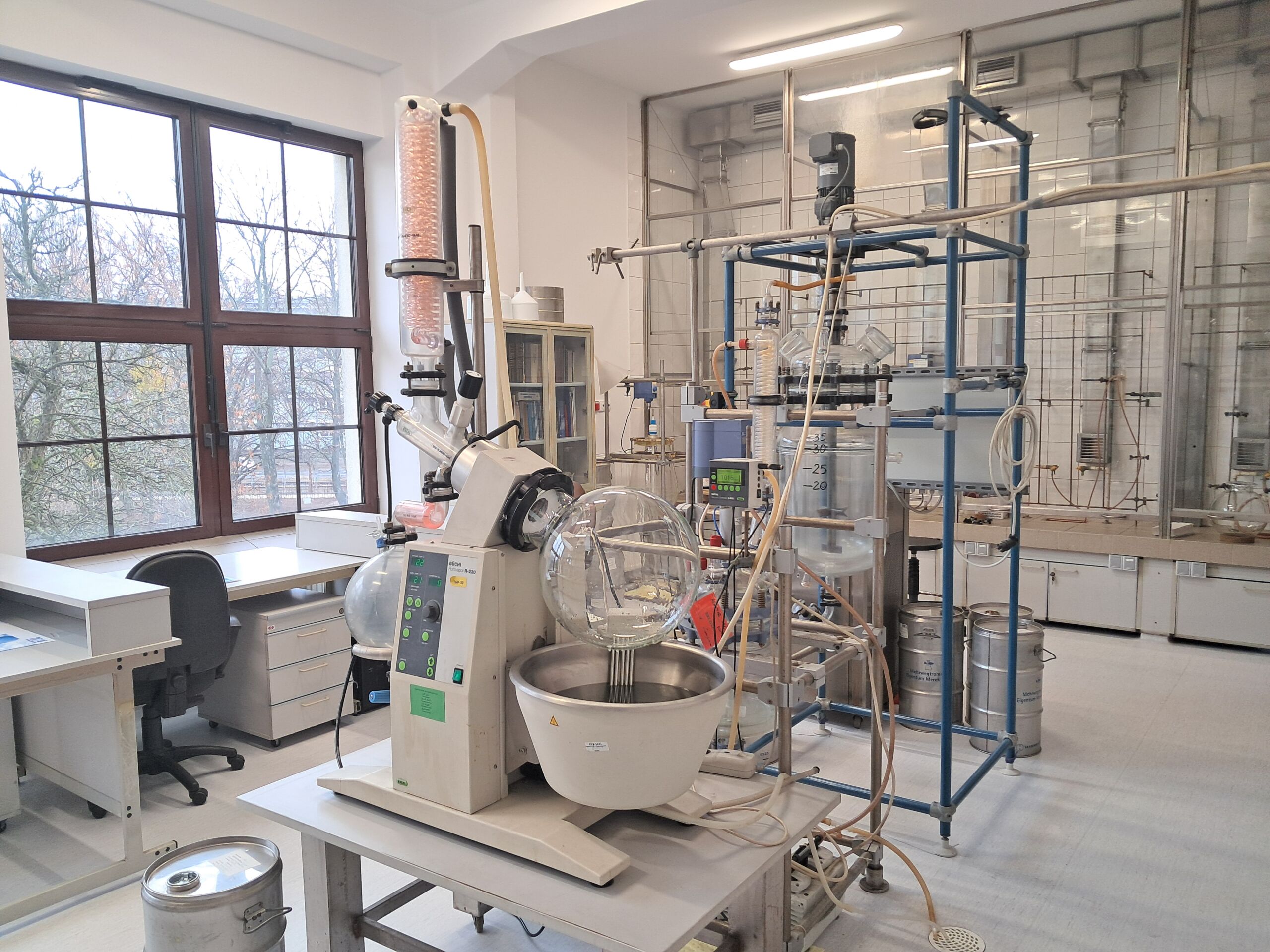
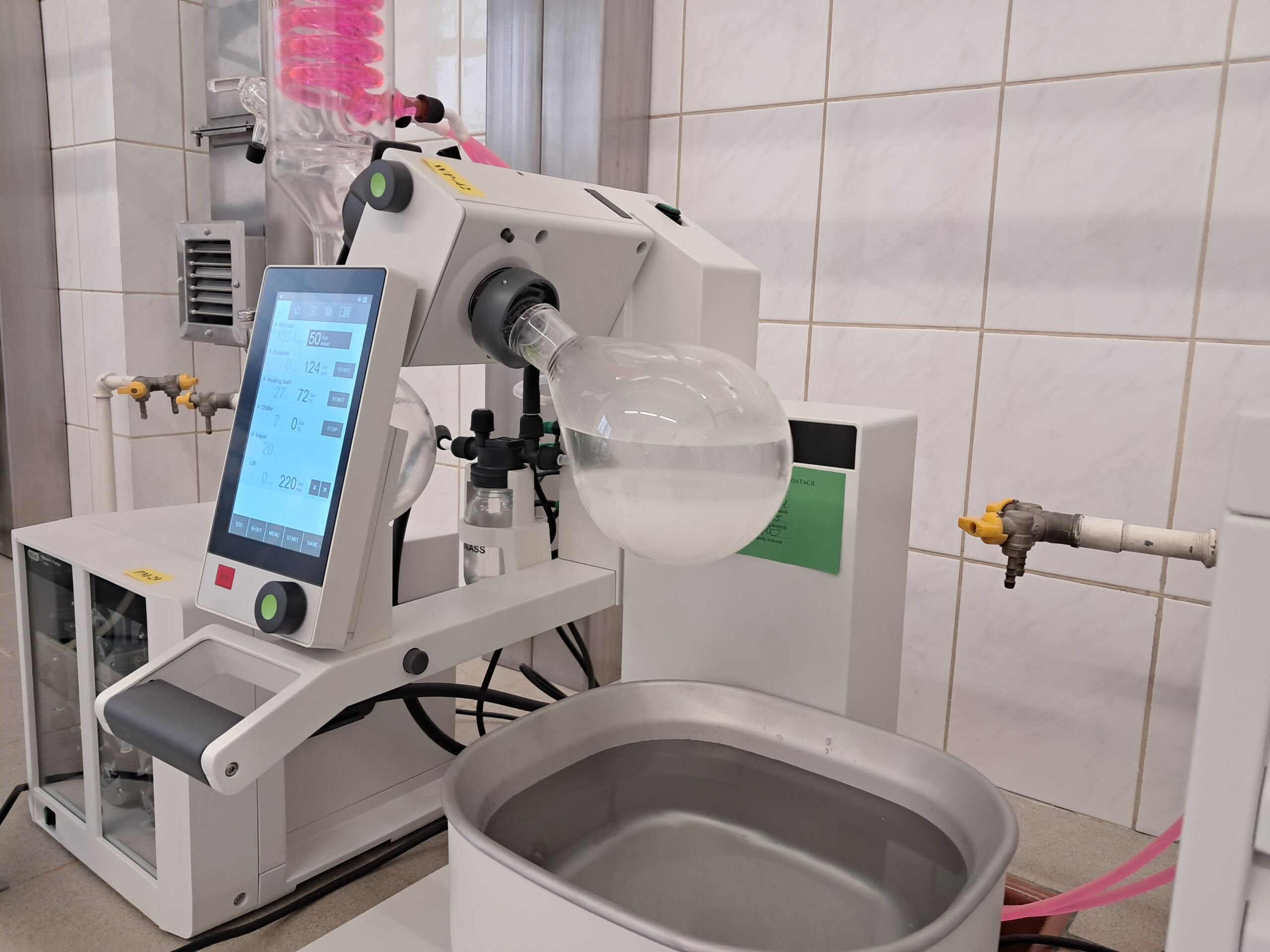
– Conducting various chemical processes (synthesis, catalytic reduction, oxidation, condensation, cyclisation) and physicochemical processes (jet micronisation, crystallisation, large-scale liquid chromatography, fractional distillation) in qualified equipment and technological installations.
API for commercialisation
Substance
Field of activity
1. Bimatoprost
Analog prostaglandyny F2α stosowany w leczeniu jaskry i wysokiego ciśnienia w gałce ocznej
2. Bosentan
A dual endothelin receptor antagonist (ERA) with affinity for ETA and ETB receptors. Reduces pulmonary and systemic vascular resistance; hypertension.
3. Brinzolamide
Glaucoma, carbonic anhydrase inhibitor
4. Exemestane
Irreversible steroidal aromatase inhibitor, breast cancer
5. Fingolimod
Multiple sclerosis
6. Lapatinib
Inhibitor of EGFR (ErbB1) and ErbB2 (HER2) tyrosine kinase; lung and breast cancer, breast cancer with overexpression of the HER2 (ErbB2) receptor
7. Nepafenac
Precursor of non-steroidal anti-inflammatory drugs; cataracts: prevention and treatment of pain and inflammation after surgery, reduction of the risk of postoperative macular oedema
8. Olopatadine
Antihistamine and anti-inflammatory drug
9. Oseltamivir
Antiviral medicine indicated for the treatment of influenza
10. Pemetrexed
Folic acid antagonist, treatment of non-small cell lung cancer